
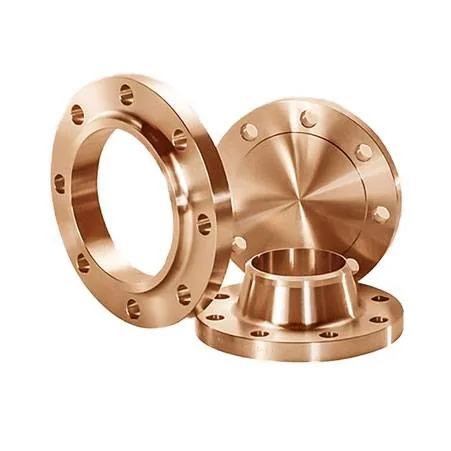
Most quotation delays come from missing information, not complicated flanges. This checklist covers what to settle before you ask a supplier for a price.
| Question | Why it matters |
|---|---|
| What fluid and conditions? | Seawater, brackish or polluted water; temperature; stagnation |
| What flow velocity at the flange? | Decides 90/10 or 70/30 and the need for matching bore |
| Which flange type? | Weld neck, slip-on, lap joint, blind and so on, by duty |
| Which size, class and facing? | NPS, class and facing must match mating parts |
| What dimensional and material standards? | Keep dimensions, material and testing separate |
| What connects to it? | Steel flanges or equipment may need isolation |
| What documents are needed? | MTC, dimensional report, certificate of conformity, PMI, third-party inspection |
1. Define the service
Copper-nickel suits flowing seawater and many chloride-bearing waters. It is not suited to ammonia-bearing media, oxidizing acids or sulfide-rich streams. Confirm the fluid first.
2. Choose the alloy
Start from the alloy in your piping specification. 90/10 serves most seawater piping. 70/30 is used for more demanding duty or to match 70/30 equipment.
3. Pick the flange type
- Weld neck for critical lines and vibration
- Slip-on for lower-demand lines
- Lap joint where dismantling is frequent
- Socket weld and threaded for small bore
- Blind and spectacle blind for closure and isolation
4. State size, class and facing
Use NPS and class, and name the facing. Our guide to NPS and pressure classes explains the terms. Remember that the rating basis for copper-nickel comes from your design code, not from carbon-steel tables.
5. Separate the standards
Name the dimensional standard (for example ASME B16.5), the material specification and product form (for example ASTM B151 or B122), and any project requirements. This avoids mismatches between what is ordered and what is supplied.
6. Plan for dissimilar metals
If the flange will bolt to steel in seawater, decide on isolation or coating. See copper nickel flanges for seawater piping.
7. List documents up front
MTC, dimensional reports, certificates of conformity, PMI and third-party inspection are arranged according to project requirements. They are cheaper to organize before manufacture than after.
Ready to ask for a price?
Send your requirement, or use the custom flange route if you have a drawing.
FAQs
What information is essential for a quotation?
Alloy, flange type, NPS, class, facing, quantity, delivery date, standards and documentation requirements.
Can I send a drawing instead?
Yes. The enquiry form accepts PDF, DWG, DXF and STEP files.