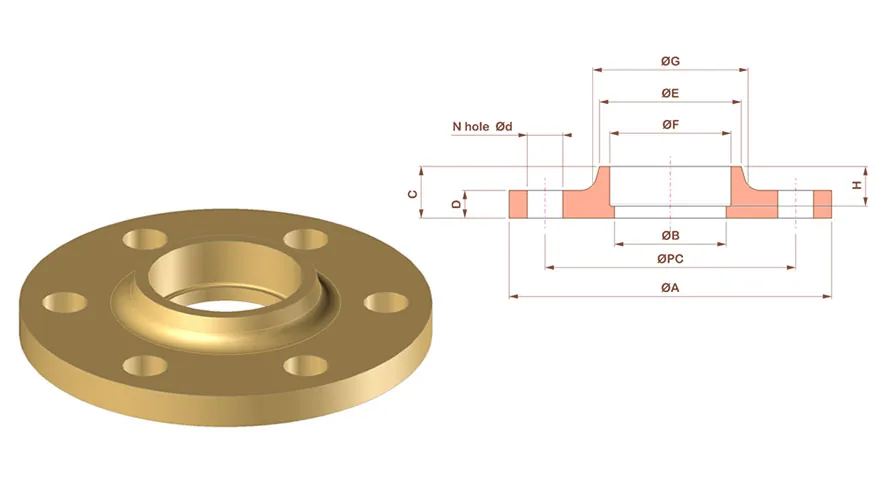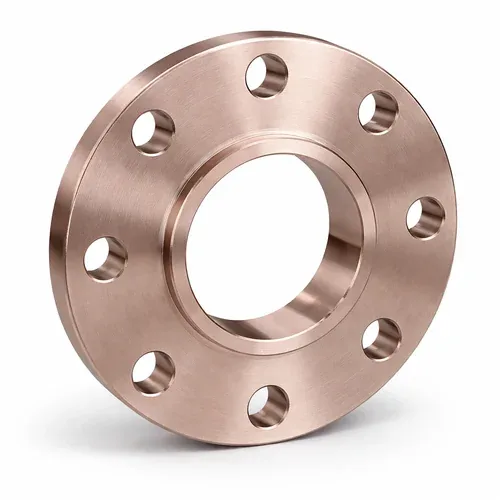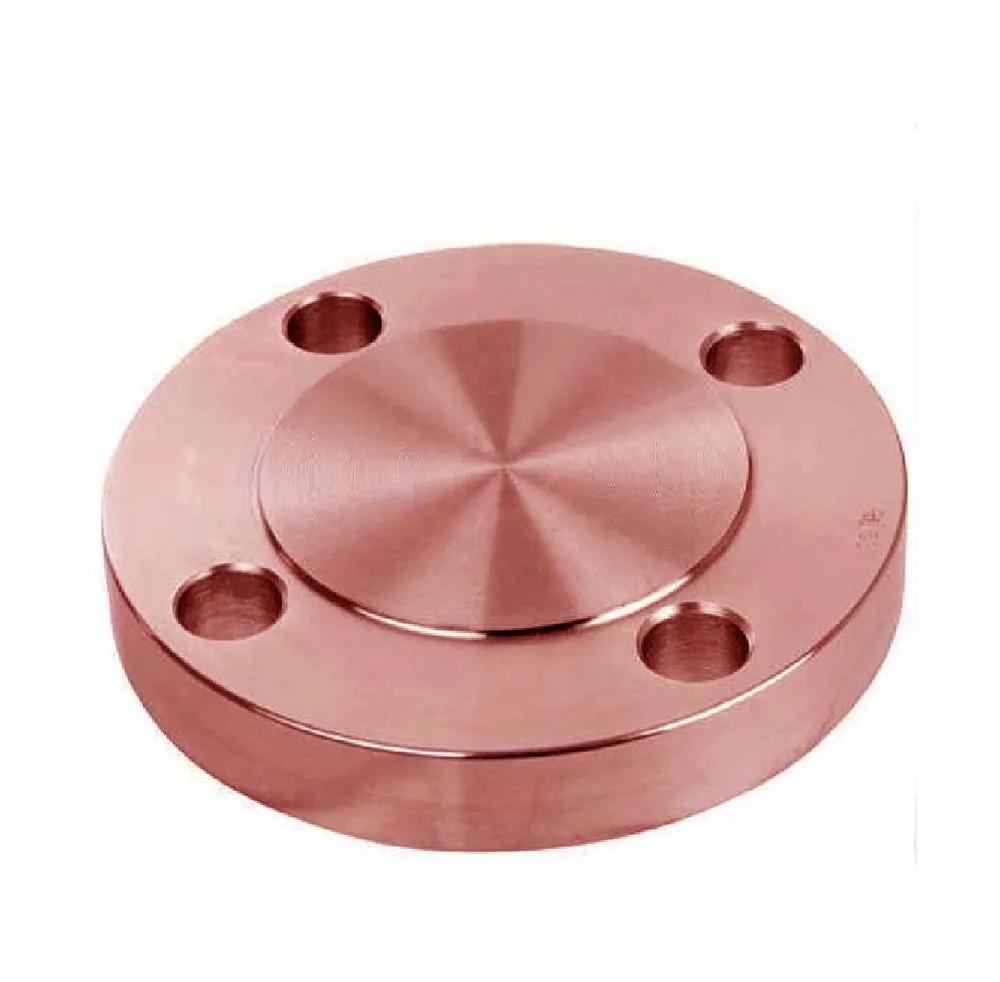
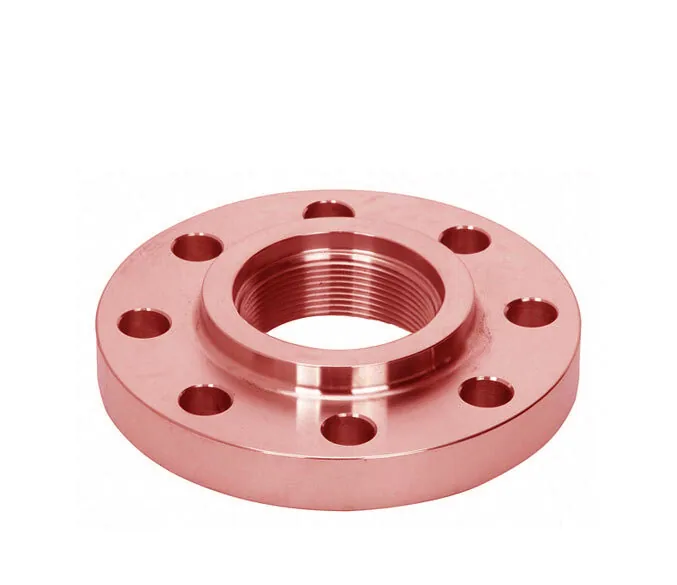
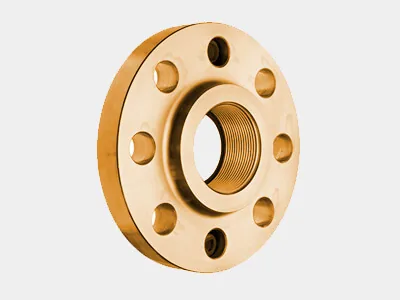
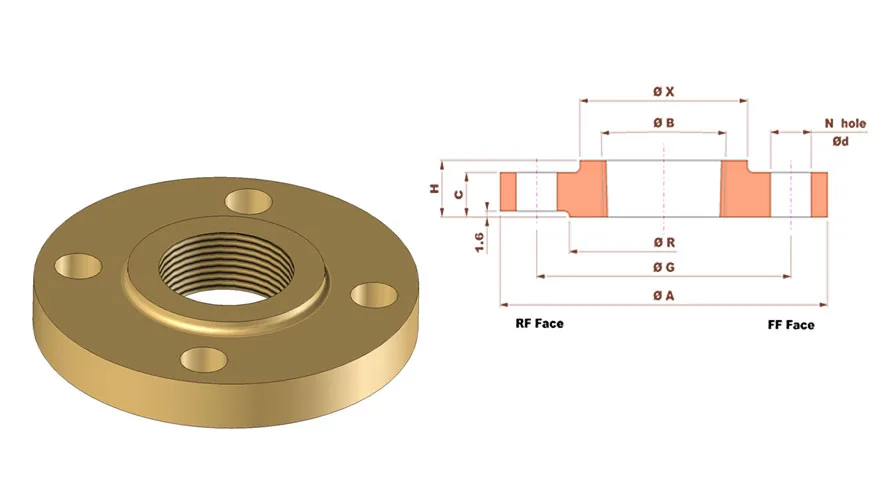
What a threaded flange is
A threaded flange, also called a screwed flange, has an internal tapered thread in the bore. The mating pipe is threaded to suit and screwed in, so no weld is made between pipe and flange.
In the USA, the thread is normally NPT (National Pipe Taper) per ASME B1.20.1. Other thread forms can be quoted on request when your piping uses them.
When threaded flanges are chosen
- Locations where hot work is restricted or welding is impractical
- Small-bore utility, instrument and sampling lines
- Systems that may need to be dismantled and re-made frequently
- Connections to threaded copper-nickel pipe or fittings
Limits that matter in seawater service
Threaded joints have crevices at the thread roots, which can trap stagnant water. They are also less tolerant of vibration, bending loads and temperature cycling than welded joints. In many designs, seawater lines of any importance use welded flanges instead, and threaded flanges are kept to small-bore auxiliary duty.
If a copper-nickel threaded flange is screwed onto steel pipe or fittings, a galvanic couple forms. Plan for isolation or accept the corrosion allowance for the less noble part. Thread sealant must be compatible with the service and with copper-nickel.
Alloys, standards and threading
Threaded flanges are machined from Cu-Ni 90/10 (UNS C70600) or Cu-Ni 70/30 (UNS C71500). Flange dimensions are typically referenced to ASME B16.5, within the sizes and classes that standard allows for threaded flanges, and the threads to ASME B1.20.1 for NPT. The ASTM or ASME material specification, such as ASTM B151, governs the alloy.
Manufactured to applicable ASME/ASTM requirements based on project specification. Thread gauging and acceptance criteria can be agreed in the purchase order.
- Thread: NPT standard; other forms on request
- Facings: RF or FF
- Sizes and classes: available as per applicable standard and customer specification
Seal welding
Some specifications require a seal weld after assembly to limit leakage along the thread. If yours does, state it at enquiry so thread form and weld access can be reviewed.
Inspection and documentation
Thread inspection, dimensional checks and material identification can be arranged. MTCs, dimensional reports and certificates of conformity are provided according to project requirements.
To quote accurately we need
- Thread type and size (for example 2 inch NPT)
- Alloy, class and facing
- Quantity and delivery date
- Mating pipe material, if galvanic isolation is a concern
Technical summary
Values below are references, not guarantees. Size range and pressure class depend on flange type, size, alloy and the applicable standard, and are confirmed against your specification at quotation.
| Item | Detail |
|---|---|
| Product type | Threaded flange (TH) |
| Alloy options | Copper-Nickel 90/10 (UNS C70600) and Copper-Nickel 70/30 (UNS C71500) |
| Typical material forms | ASTM B151 rod and bar, ASTM B122 plate; other forms per project specification |
| Dimensional reference | ASME B16.5 typical for flange dimensions; ASME B1.20.1 for NPT threads |
| Size range (NPS) | Available as per applicable standard and customer specification (small bore typical) |
| Pressure class | Per applicable standard and design basis |
| Face / end type | RF, FF |
| Typical service | Small-bore utility and instrument lines; no-weld locations |
| Documentation | Arranged according to project requirements (see Quality and Certifications) |
Copper nickel threaded flange FAQs
Which thread do copper nickel threaded flanges use?
NPT per ASME B1.20.1 is standard for US piping. Other thread forms can be quoted on request.
Are threaded flanges suitable for seawater piping?
They are used on small-bore auxiliary lines. For main seawater lines, welded flanges are more common because threads create crevices and are less tolerant of vibration.
Can a threaded flange be seal welded?
Yes, where the specification calls for it. Mention seal welding at enquiry so we can review thread and weld detail.
Is there a galvanic issue with steel pipe?
Copper-nickel is more noble than carbon steel in seawater, so a direct threaded connection to steel can accelerate attack on the steel. Isolation or design allowance should be considered.