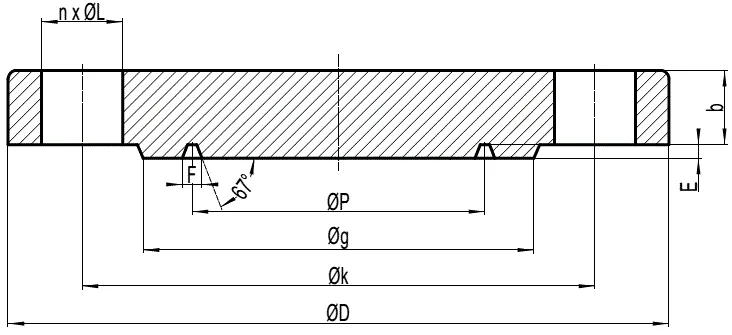
How an RTJ joint seals
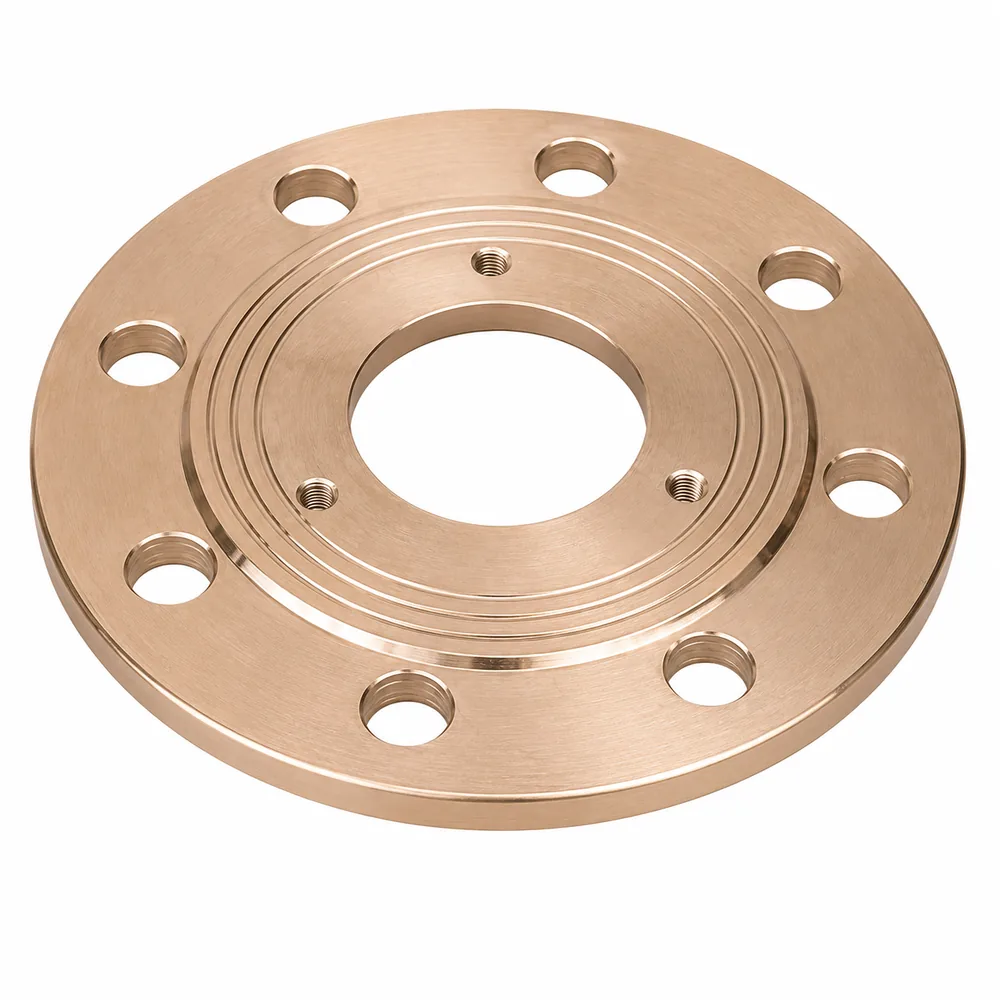
An RTJ flange has a machined groove in its face. A metal ring, oval or octagonal in section, sits in the groove. When the flanges are bolted together, the ring deforms slightly against the groove walls, forming a metal-to-metal seal.
Compared with a raised-face joint and soft gasket, an RTJ joint tolerates higher pressure and temperature swings, but it needs a more carefully machined face and a new ring each time the joint is remade.
Groove geometry and ring types
Ring and groove dimensions are defined by standards. Ring gaskets are covered by ASME B16.20, and groove dimensions on flanges by ASME B16.5 and, for larger sizes, ASME B16.47. Ring styles include the R type and the pressure-energized RX type, each with its own groove form.
- Ring number must match the flange size and class
- Groove width, depth and angle are tightly toleranced
- Groove surface finish is critical to sealing
- Ring material and hardness are specified separately
A note on copper nickel and ring material
An RTJ seal relies on the ring being softer than the groove so that the ring deforms instead of the flange. Copper-nickel is a comparatively soft flange material, so ring material selection needs engineering review. Do not assume a ring material used with steel flanges will be appropriate.
Ring material, hardness and any coating should be agreed in your specification. We can supply flanges alone, or discuss ring selection with your engineer before quotation.
Where RTJ facing is specified
- Higher-class flanged joints on offshore and process utility lines
- Joints with frequent thermal cycling
- Specifications that exclude non-metallic gaskets
- Replacement flanges where an existing RTJ joint must be matched
Alloys and standards
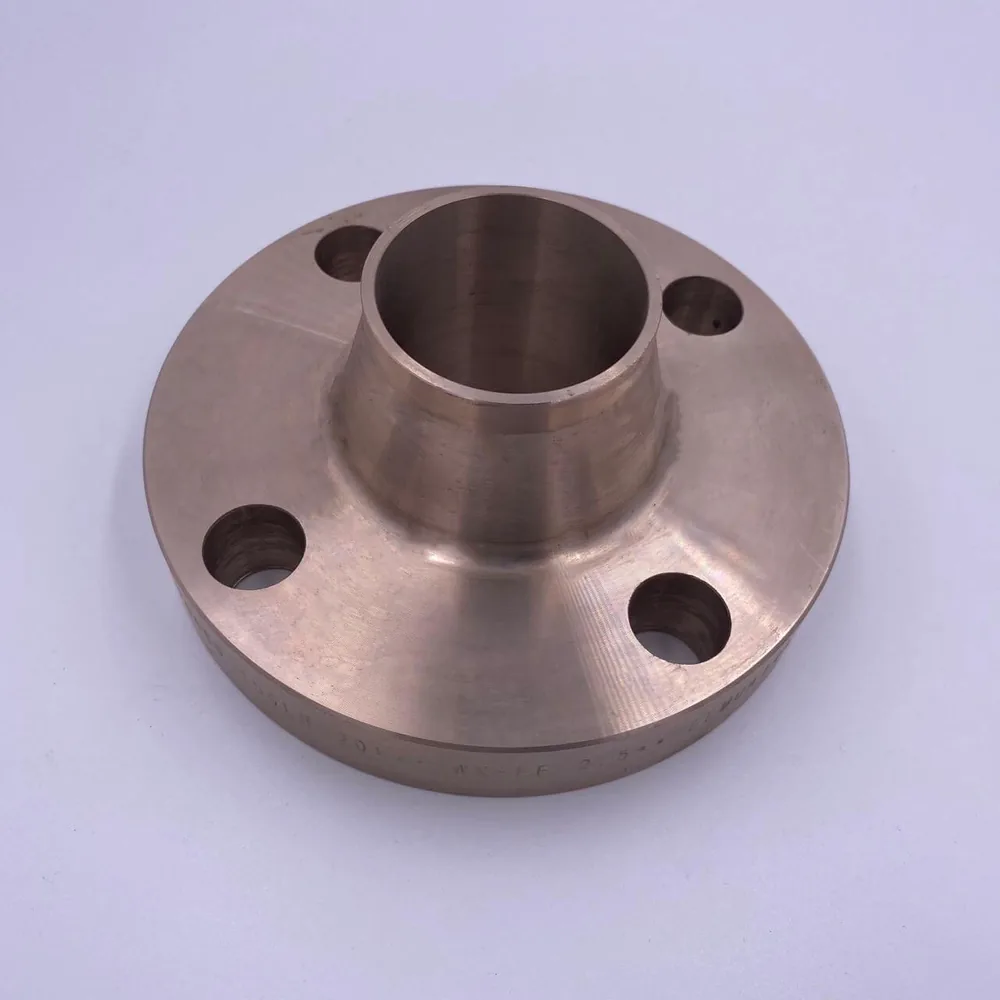
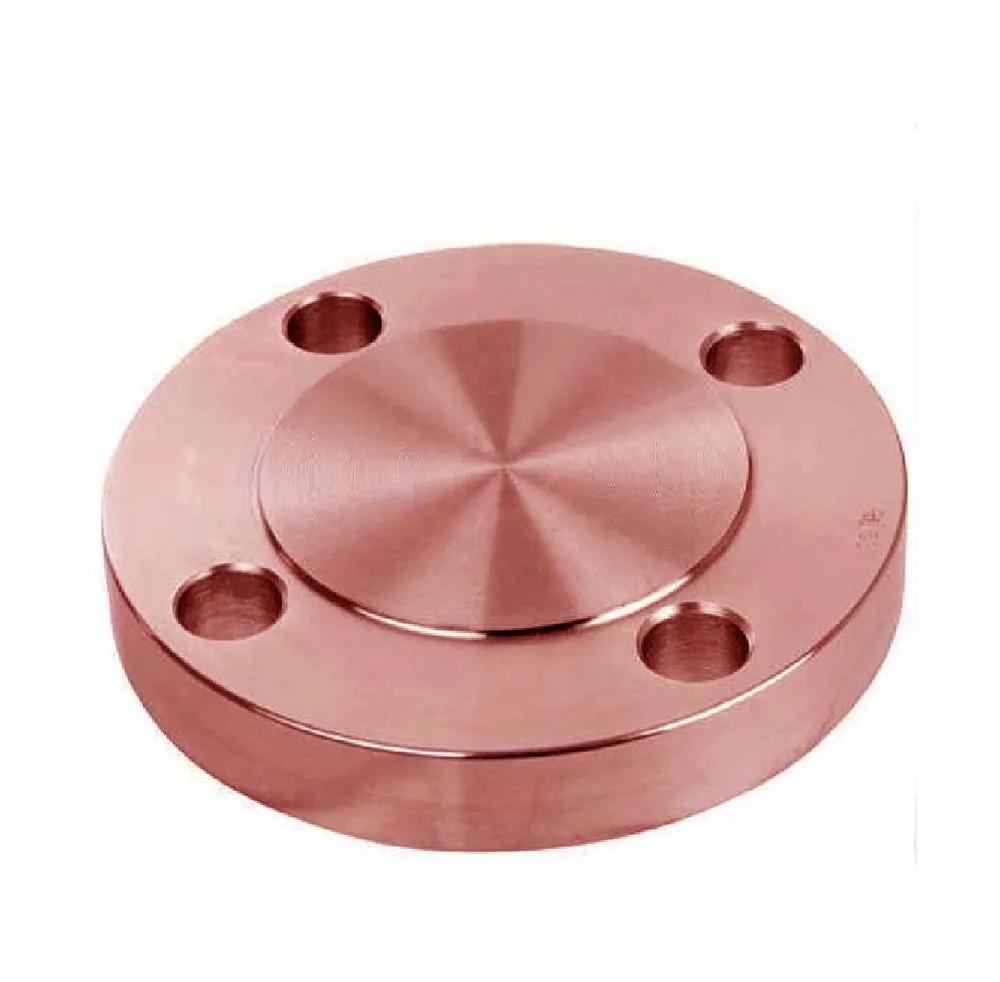
RTJ flanges can be produced in Cu-Ni 90/10 (UNS C70600) or Cu-Ni 70/30 (UNS C71500) on weld neck, slip-on, blind and other bodies. The ASTM or ASME material specification governs the alloy.
Manufactured to applicable ASME/ASTM requirements based on project specification. Sizes and classes are available as per applicable standard and customer specification.
Inspection and documentation
Groove dimensions and surface finish can be inspected against the standard or your drawing. MTCs, dimensional reports, certificates of conformity and third-party inspection are available according to project requirements.
What to include in your enquiry
- Flange body type, NPS and class
- Ring number or groove standard
- Alloy and material specification
- Ring material, if you want it addressed in the quotation
- Quantity and delivery date
Technical summary
Values below are references, not guarantees. Size range and pressure class depend on flange type, size, alloy and the applicable standard, and are confirmed against your specification at quotation.
| Item | Detail |
|---|---|
| Product type | RTJ facing on weld neck, slip-on, blind and other flange bodies |
| Alloy options | Copper-Nickel 90/10 (UNS C70600) and Copper-Nickel 70/30 (UNS C71500) |
| Typical material forms | ASTM B151 rod and bar, ASTM B122 plate; other forms per project specification |
| Dimensional reference | ASME B16.5 / B16.47 groove dimensions; ASME B16.20 for ring gaskets |
| Size range (NPS) | Available as per applicable standard and customer specification |
| Pressure class | Per applicable standard and design basis |
| Face / end type | RTJ (R, RX groove forms per standard) |
| Typical service | Higher-pressure and cyclic-temperature joints |
| Documentation | Arranged according to project requirements (see Quality and Certifications) |
Copper nickel rtj flange FAQs
What is the difference between RF and RTJ?
RF flanges seal with a soft or semi-metallic gasket over a raised face. RTJ flanges seal with a metal ring in a machined groove. See RF vs RTJ flanges.
Do you supply the ring gaskets?
Ring material needs engineering review with copper-nickel flanges. Tell us your specification and we will confirm what is included in the quotation.
Which standard covers ring gaskets?
ASME B16.20 covers ring joint gaskets, along with spiral-wound and metal-jacketed gaskets.
Can RTJ facing be added to any flange body?
RTJ facing is available on several body types. Availability depends on size, class and the governing standard.