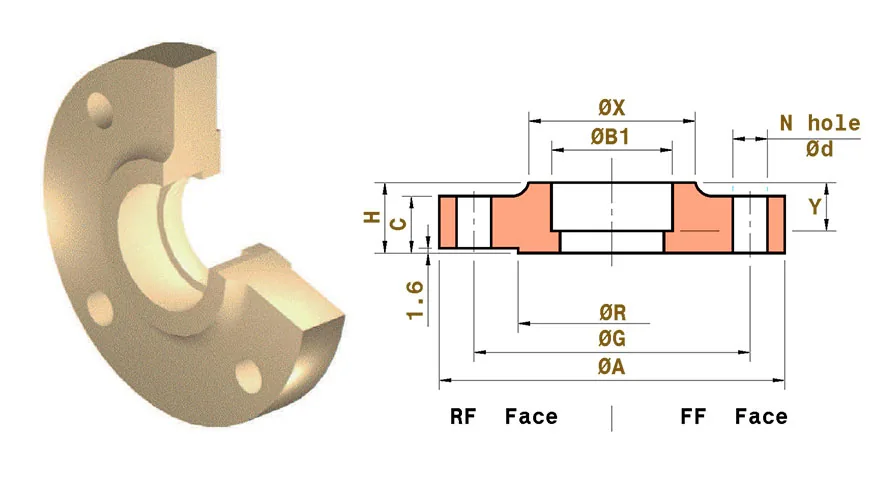
How socket weld flanges are built
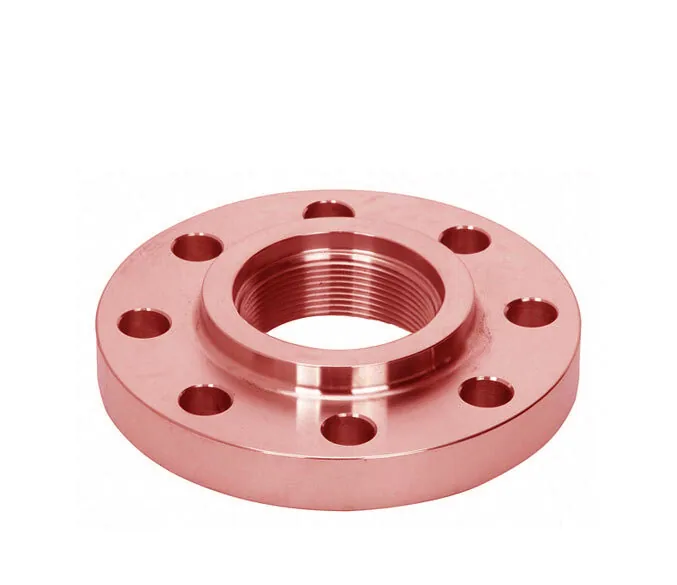
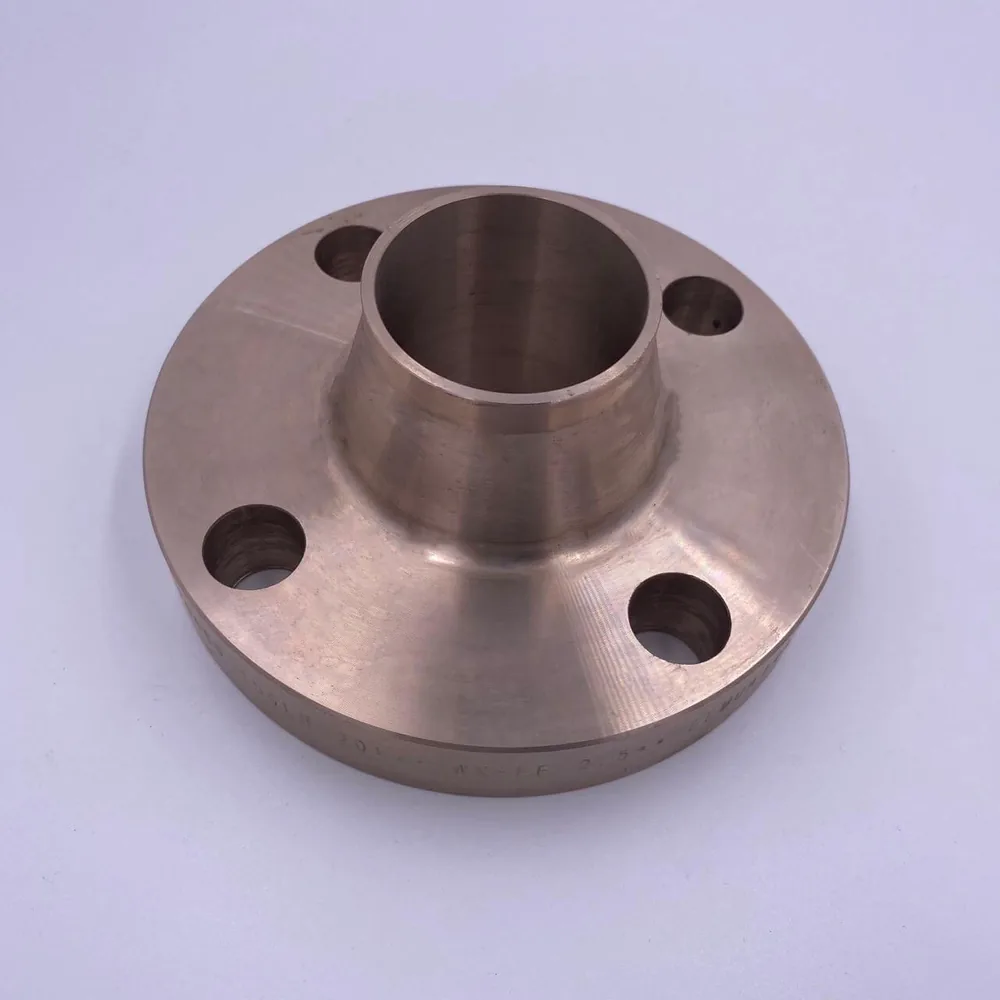
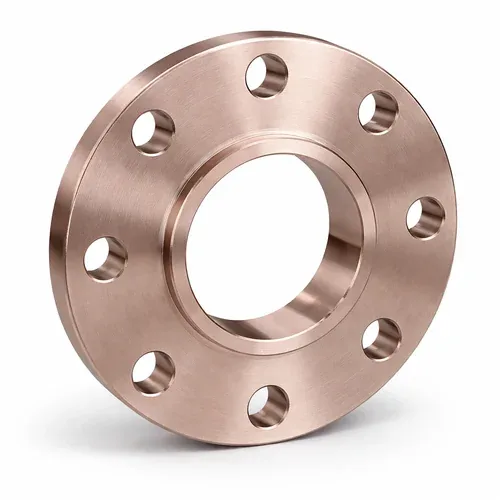
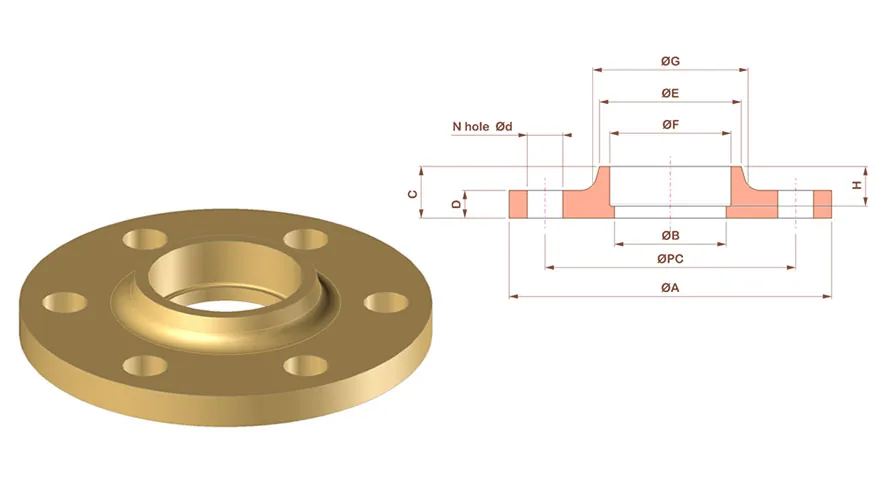
A socket weld (SW) flange has a counterbore, or socket, in the back of the flange. The pipe is inserted into the socket until it bottoms out, then withdrawn slightly to leave an expansion gap before the external fillet weld is made.
The bore below the socket shoulder is machined to match the pipe inside diameter so the flow path stays smooth. Only a single outside fillet weld is needed, which makes the joint fast to complete on small pipe.
Small bore is the point
Socket weld flanges are intended for small-diameter piping. In ASME B16.5 the socket weld type is limited to smaller NPS sizes, with the maximum size reducing as pressure class increases. For larger pipe, weld neck or slip-on flanges are normally used instead.
In copper-nickel systems, socket weld flanges turn up on chemical dosing connections at seawater intakes, sample points, instrument isolation lines and small utility branches off larger seawater mains.
Design points to check
- The expansion gap between pipe end and socket shoulder must be left per your code. Bottoming the pipe out can crack the weld as it cools.
- The crevice at the socket shoulder is a stagnation point. Avoid socket joints on lines that sit full of stagnant seawater.
- Socket depth and bore must match the pipe actually being used. Confirm pipe OD and wall thickness at enquiry.
- Fillet weld size is set by your welding procedure and design code.
Alloys, standards and facings
Socket weld flanges are produced in Cu-Ni 90/10 (UNS C70600) or Cu-Ni 70/30 (UNS C71500). Facing and drilling are typically referenced to ASME B16.5 within its socket weld size limits, and material requirements follow the applicable ASTM or ASME specification such as ASTM B151.
Manufactured to applicable ASME/ASTM requirements based on project specification. Where your line uses small-bore copper-nickel tube or pipe of non-standard dimensions, send the drawing so the socket can be sized correctly.
- Facings: RF or FF per your specification
- Sizes: available as per applicable standard and customer specification
- Pressure class: as agreed against your design basis
Inspection and documentation
Socket depth, bore, facing and drilling can be inspected against your drawing or standard. Material identification, MTC, dimensional reports and third-party inspection are available according to project requirements.
What to include in your enquiry
- Pipe outside diameter and wall thickness
- Alloy, NPS, class and facing
- Quantity and delivery date
- Required documents
Technical summary
Values below are references, not guarantees. Size range and pressure class depend on flange type, size, alloy and the applicable standard, and are confirmed against your specification at quotation.
| Item | Detail |
|---|---|
| Product type | Socket weld flange (SW) |
| Alloy options | Copper-Nickel 90/10 (UNS C70600) and Copper-Nickel 70/30 (UNS C71500) |
| Typical material forms | ASTM B151 rod and bar, ASTM B122 plate; other forms per project specification |
| Dimensional reference | ASME B16.5 typical within its socket weld size limits; project drawing where supplied |
| Size range (NPS) | Available as per applicable standard and customer specification (small bore) |
| Pressure class | Per applicable standard and design basis |
| Face / end type | RF, FF |
| Typical service | Dosing, sampling, instrument and auxiliary lines |
| Documentation | Arranged according to project requirements (see Quality and Certifications) |
Copper nickel socket weld flange FAQs
What size range do socket weld flanges cover?
They are used on small-bore piping. The maximum size depends on the governing standard and pressure class, so confirm against your specification when you enquire.
Why is a gap left between the pipe and the socket shoulder?
The gap lets the pipe and weld expand and contract without cracking the fillet weld. The size of the gap follows your code or welding procedure.
Are socket weld joints suitable for stagnant seawater?
The crevice at the socket shoulder can be vulnerable in stagnant conditions. For lines that stay full without flow, review the joint choice with your piping designer.
Can you supply socket weld flanges for tube sizes that are not standard?
Send your drawing and tube dimensions. Our team will review the socket detail and confirm feasibility.