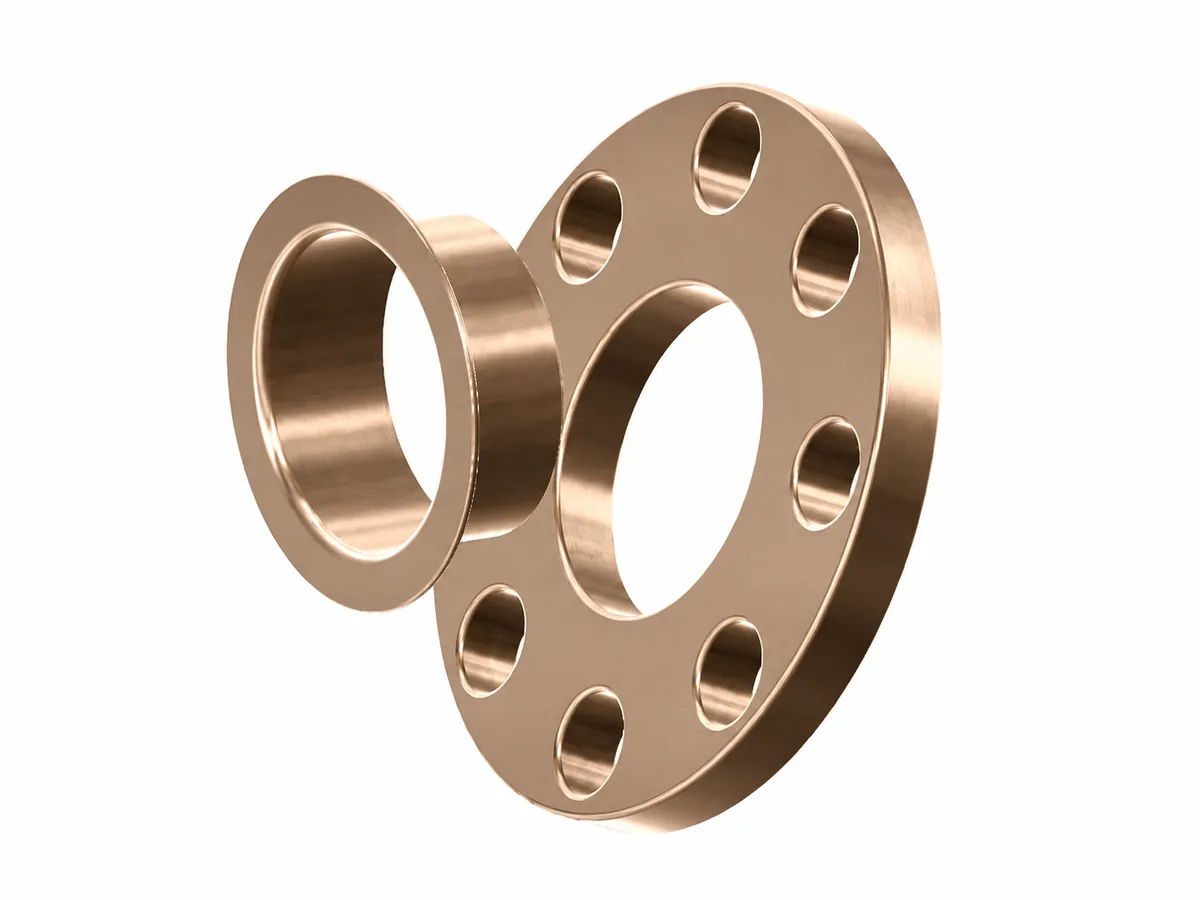
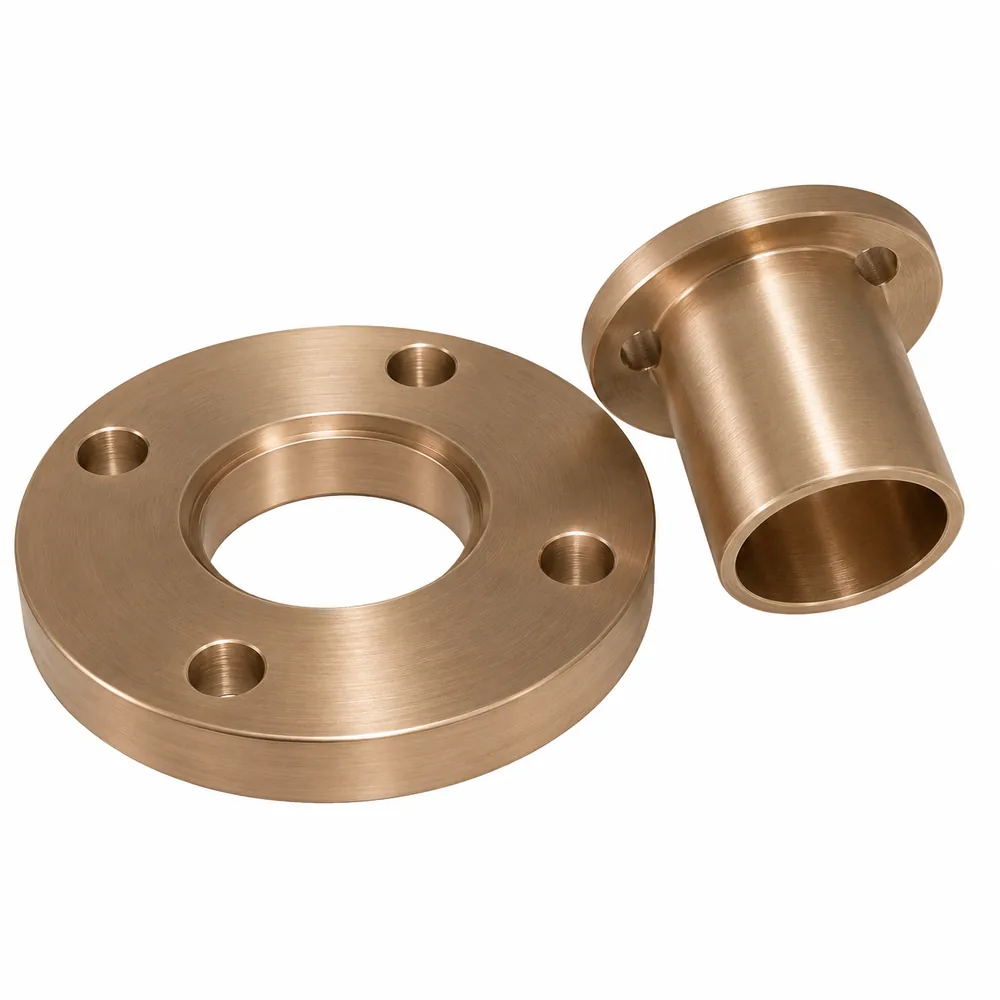
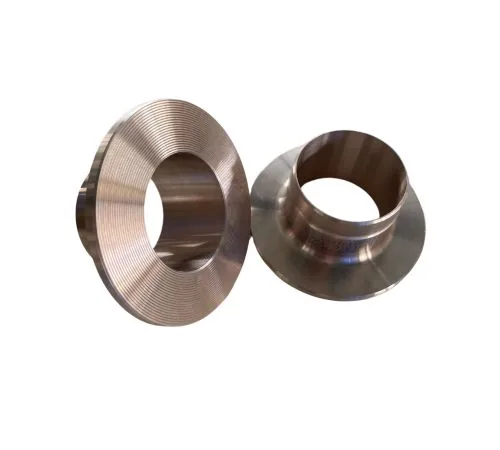
Two parts, one joint
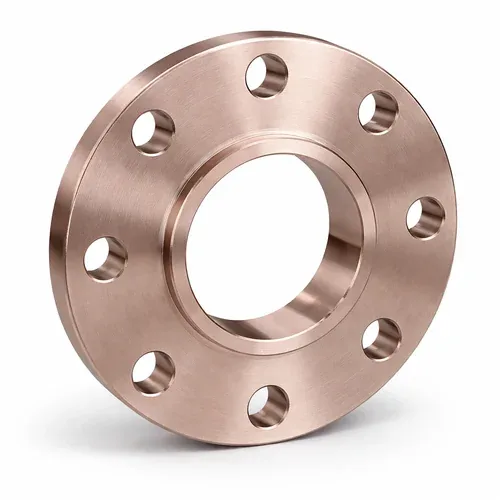
A lap joint has two components. The stub end is welded to the pipe and carries a flared face that seals against the mating face. The lap joint flange slips loosely over the pipe behind the stub end and presses it against the gasket when bolted.
Because the flange is not welded, it can rotate to line up bolt holes. That is a real benefit on pipework with many bends, on spools that must be dismantled for cleaning, and during tight installation sequences.
Why marine designers use lap joints
In a lap joint, the fluid only touches the stub end and the gasket. The backing flange does not need to be corrosion resistant to the fluid, so some designs use a lower-cost material behind a copper-nickel stub end. Where that is done, galvanic effects and crevice conditions between the two materials have to be managed with coatings, sleeves or isolation.
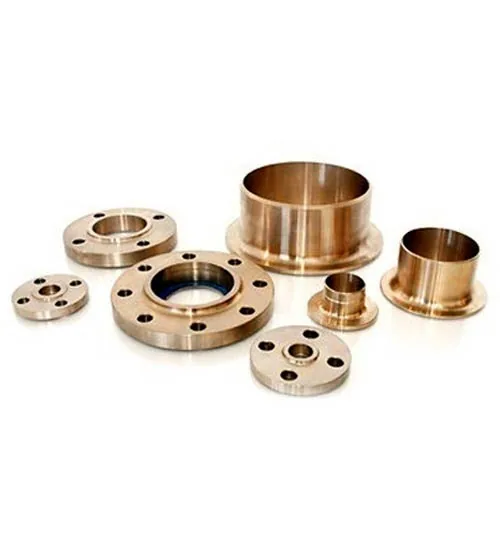
Our supply covers copper-nickel lap joint flanges in the same alloy as the stub end, as well as stub ends for use with other backing flanges. Say which you need when you enquire.
Alloys and standards
Lap joint flanges and stub ends are produced in Cu-Ni 90/10 (UNS C70600) or Cu-Ni 70/30 (UNS C71500). Flange drilling and facing are typically referenced to ASME B16.5, with stub ends typically referenced to ASME B16.9 or MSS SP-43 where applicable. Material requirements follow the ASTM or ASME specification, such as ASTM B151 bar.
Manufactured to applicable ASME/ASTM requirements based on project specification. Dimensional standards, material standards and project requirements are quoted separately so each is traceable on the order.
- Stub end length: short or long pattern per your specification
- Flange facing: RF or FF per mating components
- Sizes and classes: available as per applicable standard and customer specification
Limits to be aware of
- The lap joint is generally used where pressure and external loads are moderate; check your design code for its permitted service.
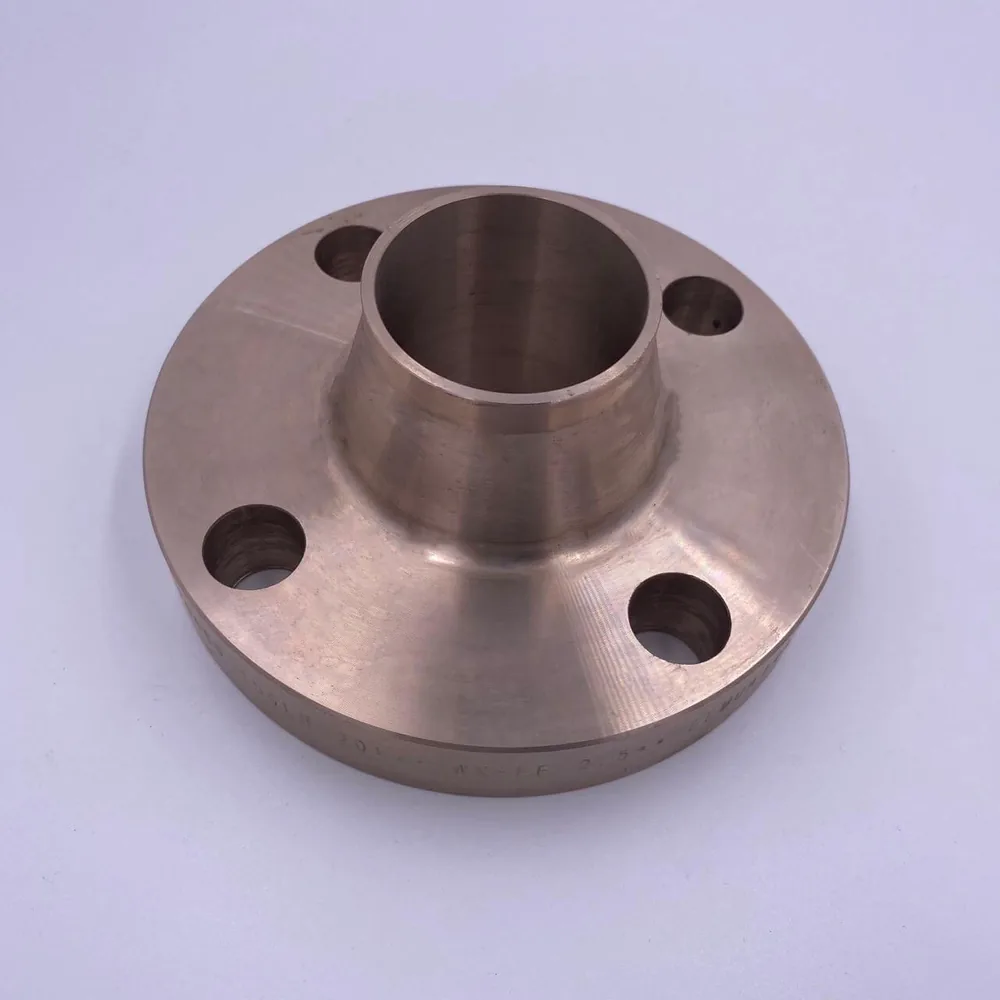
- The flange can rotate, so it does not stiffen the pipe the way a weld neck does.
- Stub-end-to-pipe welds are butt welds and are inspected as such.
- Gasket and face finish on the stub end need attention, because the face is the sealing surface.
Inspection and documentation
Dimensional inspection, material identification and certificates can be arranged for both the flange and the stub end. MTCs, dimensional reports, certificates of conformity and third-party inspection are provided according to project requirements.
What to include in your enquiry
- Flange only, stub end only, or both
- Alloy, NPS, class and facing
- Stub end length pattern and pipe schedule
- Quantity and delivery date
Technical summary
Values below are references, not guarantees. Size range and pressure class depend on flange type, size, alloy and the applicable standard, and are confirmed against your specification at quotation.
| Item | Detail |
|---|---|
| Product type | Lap joint flange (LJ) with stub end |
| Alloy options | Copper-Nickel 90/10 (UNS C70600) and Copper-Nickel 70/30 (UNS C71500) |
| Typical material forms | ASTM B151 rod and bar, ASTM B122 plate; other forms per project specification |
| Dimensional reference | ASME B16.5 (flange); ASME B16.9 / MSS SP-43 (stub end) typical |
| Size range (NPS) | Available as per applicable standard and customer specification |
| Pressure class | Per applicable standard and design basis |
| Face / end type | Flange RF or FF; stub end lapped face |
| Typical service | Seawater and marine pipework requiring frequent dismantling |
| Documentation | Arranged according to project requirements (see Quality and Certifications) |
Copper nickel lap joint flange FAQs
What is the advantage of a lap joint flange?
The flange rotates freely, so bolt holes align easily. It also means the flange can be a different material from the stub end where the design allows.
Do you supply the stub ends as well?
Yes. Specify flange only, stub end only, or both when you enquire.
Can the backing flange be carbon steel?
Some designs do this to reduce cost. A galvanic couple forms with copper-nickel, so coatings or isolation need to be part of the design. Confirm the approach with your piping designer.
Can a lap joint flange be used at high pressure?
Permitted service is set by your design code and the flange class. For demanding duty, weld neck flanges are usually chosen.