
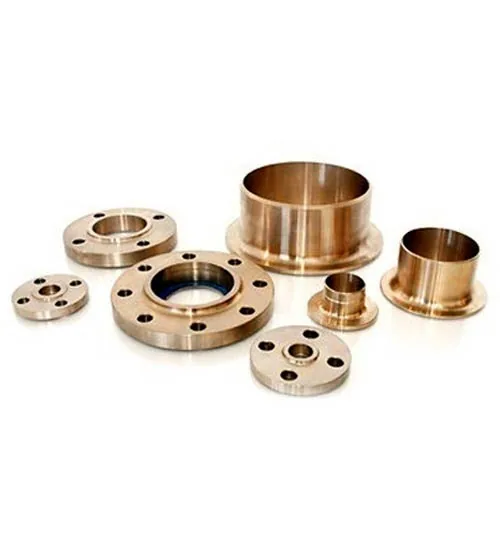
Seawater attacks carbon steel quickly, and many ordinary alloys fail in it. Copper-nickel is one of the metals designed to survive it. Flanges are the joints in a seawater line, and they need to behave like the pipe they connect.
How the protective film forms
In clean, aerated seawater, copper-nickel develops a thin surface film that slows further corrosion. The film builds over the first weeks and months of service. For that reason, commissioning practice matters: newly installed copper-nickel lines should be brought into service with clean seawater, and long periods of stagnation with polluted water early in life should be avoided.
Velocity and turbulence
High velocity or local turbulence can strip the film and cause erosion-corrosion. Piping designers set maximum velocities for each alloy and size, and add allowances at fittings. Flanges contribute in two ways: the bore should match the pipe so there is no step, and gaskets should not protrude into the flow.
Stagnation and lay-up
Seawater left standing in a copper-nickel line can foul or become oxygen-depleted, and sulfide-polluted stagnant water is especially damaging to the film. Lines that will be idle should be drained, flushed or protected according to your lay-up procedure.
Galvanic coupling with steel
Copper-nickel is more noble than carbon steel in seawater. Where a copper-nickel flange is bolted to a steel flange, the steel side can corrode faster. Typical responses are isolation gaskets with insulating sleeves and washers on the bolts, coatings on the steel, or keeping the dissimilar-metal joint where corrosion is accepted or inspected. This is a design decision. We can include isolation components in a quotation when they are specified.
Choosing flange types
- Weld neck flanges for critical lines, pump discharges and vibration
- Slip-on flanges for lower-demand cooling and utility lines
- Lap joint flanges where frequent dismantling is expected
- Blind flanges and spectacle blinds for isolation and closures
- Orifice flanges where flow is metered
Gaskets and bolting
Gasket material should be compatible with seawater and not load the flange excessively, because copper-nickel is a comparatively soft material. Bolting materials should be chosen with galvanic effects in mind. Your piping specification normally defines both.
Questions to settle before you order
- Which alloy, 90/10 or 70/30?
- Design velocity at the flange locations
- Whether any joints connect to steel and need isolation
- Documentation needed: MTC, dimensional report, certificate of conformity, PMI, third-party inspection
When you are ready, send your requirement with NPS, class, facing, alloy and quantity.
FAQs
Can copper nickel flanges be bolted to steel flanges?
Yes, but a galvanic couple forms in seawater. Isolation gaskets, sleeves and washers or coatings on the steel are common measures.
Do flanges affect erosion-corrosion?
They can. A bore that matches the pipe and a gasket that does not protrude both reduce turbulence at the joint.