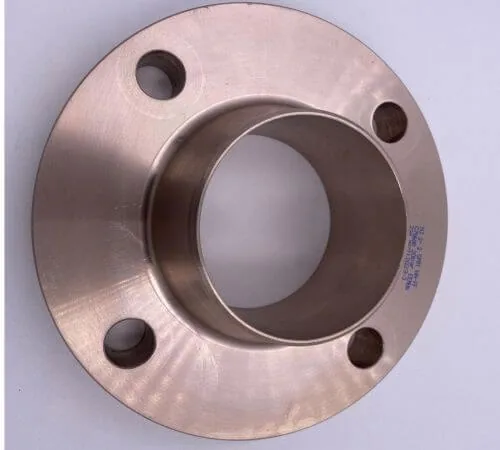
What an expander flange is
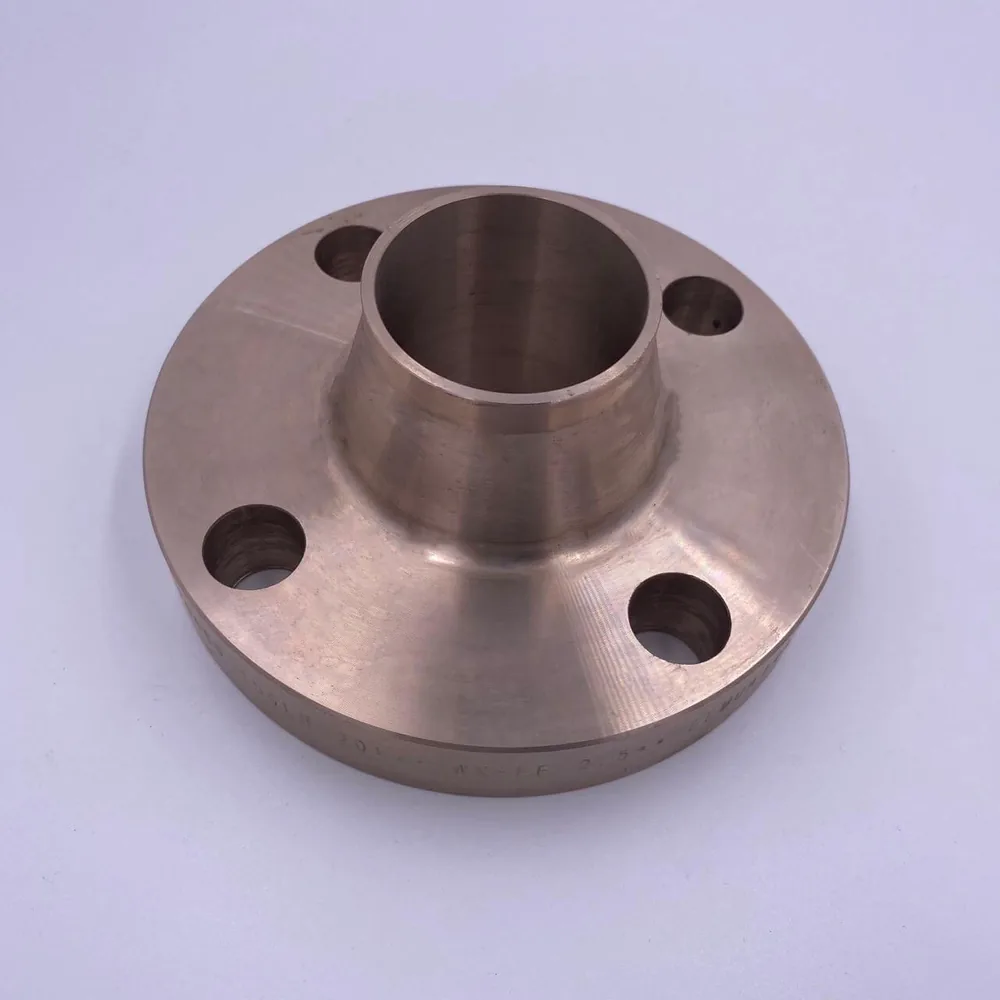
An expander flange is a weld neck style flange whose hub steps the bore from the pipe size at the weld end to a larger size at the flange face. It is used where a line enlarges at a flanged connection, such as at a pump discharge or an exchanger nozzle.
Normally this transition would be made with a butt-weld reducer welded to a standard flange. An expander flange integrates both functions in one machined component.
Why consider one in a copper-nickel line
- One fewer weld in the line, which means one fewer joint to inspect and one fewer place for flow disturbance
- A shorter assembly length where space is tight
- A smooth transition geometry, controlled by the drawing
- Fewer components to trace and certify
Dimensions are defined by drawing
There is no single dimensional table for expander flanges comparable to the flange ring dimensions in ASME B16.5. The flange face and drilling normally follow the standard flange for the larger size, while the hub and transition geometry are project-specific.
For this reason we quote against a drawing, or against a clear description: weld-end pipe size and wall thickness, flange NPS and class, overall length and transition style.
Flow and corrosion considerations
Copper-nickel relies on a stable surface film, and abrupt changes in bore cause turbulence that can disturb it. A gradual transition is preferable to a sharp one. Transition length and angle should be set by your piping designer, and checked against flow velocity limits for the alloy.
Alloys and standards
Expander flanges are produced in Cu-Ni 90/10 (UNS C70600) or Cu-Ni 70/30 (UNS C71500). Face and drilling are typically referenced to ASME B16.5 for the flange end, weld end preparation to ASME B16.25 or your procedure, and material to the applicable ASTM or ASME specification.
Manufactured to applicable ASME/ASTM requirements based on project specification. Sizes and classes are available as per applicable standard and customer specification.
Inspection and documentation
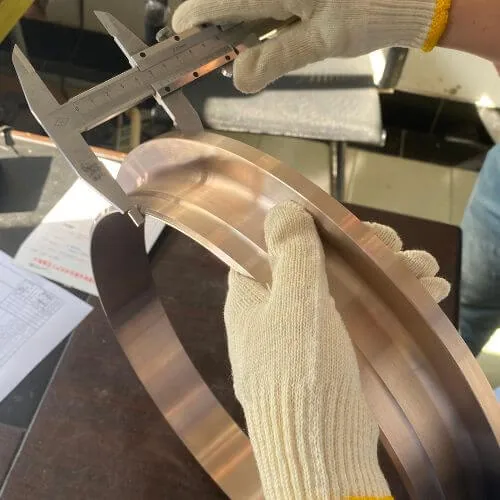
Dimensional inspection of hub, bore and facing can be arranged against your drawing. MTCs, dimensional reports and certificates of conformity are available according to project requirements.
What to send
- A drawing or sketch of the required transition
- Pipe size and wall thickness at the weld end
- Flange NPS, class and facing at the large end
- Alloy, quantity and delivery date
Technical summary
Values below are references, not guarantees. Size range and pressure class depend on flange type, size, alloy and the applicable standard, and are confirmed against your specification at quotation.
| Item | Detail |
|---|---|
| Product type | Expander flange (weld neck style) |
| Alloy options | Copper-Nickel 90/10 (UNS C70600) and Copper-Nickel 70/30 (UNS C71500) |
| Typical material forms | ASTM B151 rod and bar, ASTM B122 plate; other forms per project specification |
| Dimensional reference | Flange face and drilling per ASME B16.5; hub and transition per customer drawing |
| Size range (NPS) | Per drawing / Available as per applicable standard and customer specification |
| Pressure class | Per applicable standard and design basis |
| Face / end type | RF, FF; RTJ on request |
| Typical service | Pump discharge, exchanger nozzles and line size increases |
| Documentation | Arranged according to project requirements (see Quality and Certifications) |
Copper nickel expander flange FAQs
Is there a standard for expander flanges?
The flange face and drilling usually follow a standard such as ASME B16.5. The transition hub is normally defined by drawing.
Why use an expander flange instead of a reducer plus flange?
It removes one weld and shortens the assembly. Some designers prefer the separate components for ease of procurement or because the code requires it, so check your specification.
Can you supply a reducing flange as well?
Send the drawing. We will review it and confirm what can be manufactured.
What information is needed to quote?
Weld-end pipe size and wall thickness, flange NPS and class, transition style, alloy and quantity. A drawing is the quickest route.