Composition and designations
Copper Nickel 70/30 is nominally 70% copper and 30% nickel, with controlled additions of iron and manganese. The wrought alloy is UNS C71500, and in European usage CuNi30Mn1Fe. Cast material of similar nominal composition has a separate UNS designation under ASTM B369.
Chemical limits are set by the applicable ASTM or ASME material specification, which governs each order. Mechanical properties depend on the product form and temper called for in that specification.
How 70/30 differs from 90/10
The higher nickel content raises strength and hardness, and generally improves resistance to erosion-corrosion and impingement. It also raises cost, because nickel is a larger part of the alloy. Both alloys depend on the same type of protective surface film.
Neither alloy is a cure-all. Both are affected by sulfide pollution, and neither is suited to ammonia-bearing media or oxidizing acids. Design velocity limits still apply to 70/30; they are simply set higher than for 90/10.
| Consideration | What it means for 70/30 |
|---|---|
| Strength | Higher than 90/10, which can allow lighter sections in some designs |
| Flow tolerance | Better tolerance of high velocity and turbulence, within your design limits |
| Cost | Higher material cost than 90/10 |
| Welding | Weldable with matching copper-nickel filler under a qualified procedure |
Seawater service and marine engineering
70/30 is used in marine engineering for seawater lines that see higher flow rates, many fittings or demanding thermal duty. It is also the alloy of choice where the heat-exchanger tubes and tubesheets are 70/30, so the flange joints share the same corrosion behavior as the rest of the circuit.
Desalination and offshore
Thermal desalination plants use copper-nickel in seawater-side piping and heat-exchange equipment. 70/30 is selected for the more demanding sections of those systems. High-pressure reverse osmosis trains generally use other alloys, so confirm the intended duty with the plant designer.
Offshore facilities use 70/30 in seawater lift, cooling-water and firewater systems when the specification asks for it or when velocity demands make it the safer choice.
Heat-exchanger and shipbuilding systems
- Seawater-cooled heat-exchanger nozzles and channel connections
- Condenser and auxiliary cooling circuits at coastal power stations
- Shipboard seawater cooling, with 70/30 where specifications call for it
- Naval and specialist marine systems governed by customer specifications
Fabrication notes
70/30 is welded with matching copper-nickel filler metal under a qualified procedure, on clean surfaces and with the same contamination precautions as 90/10. Its higher strength means machining needs sharp tooling and appropriate feeds, and we plan stock and machining allowance accordingly.
Cu-Ni 70/30 flange types we manufacture
Each flange type is available in 70/30. The pages below describe construction, standards references and enquiry details.
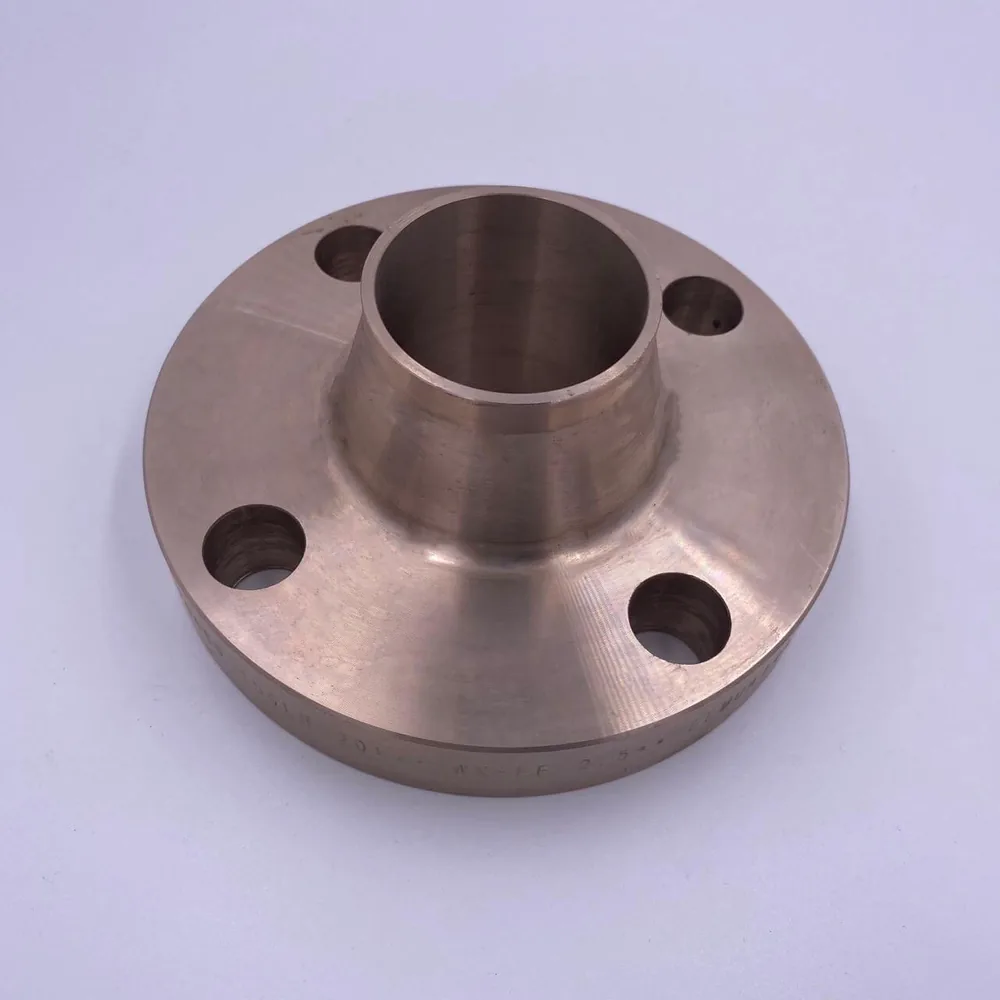
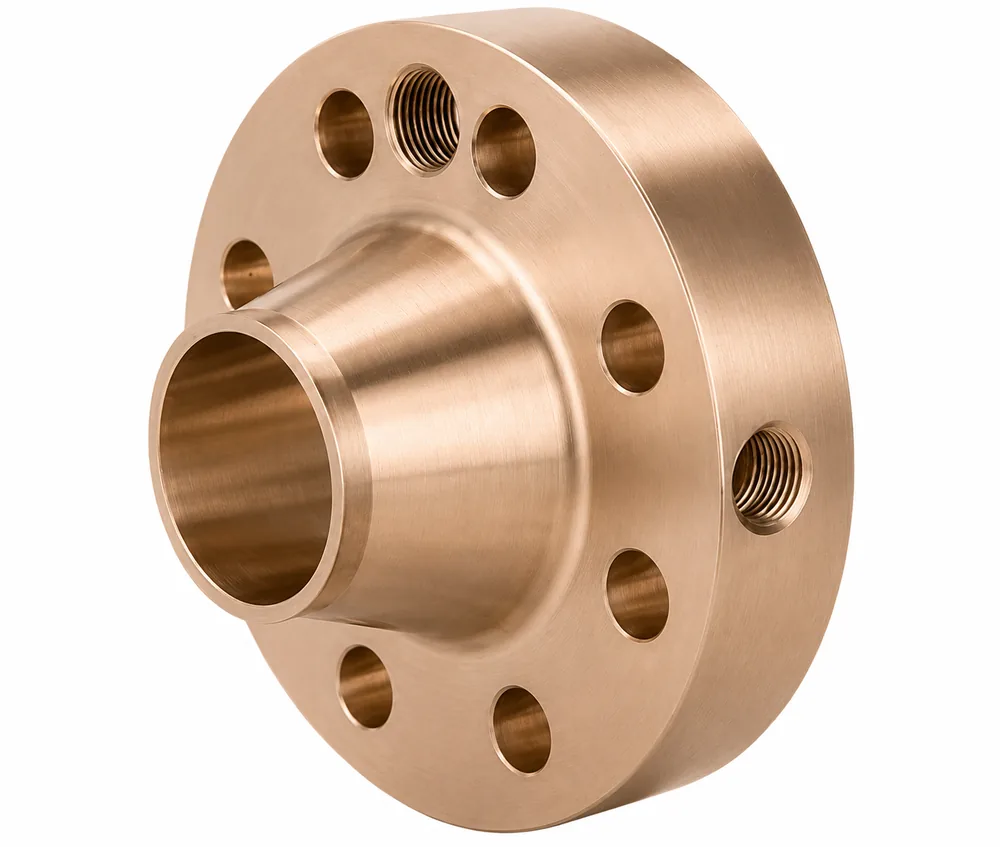
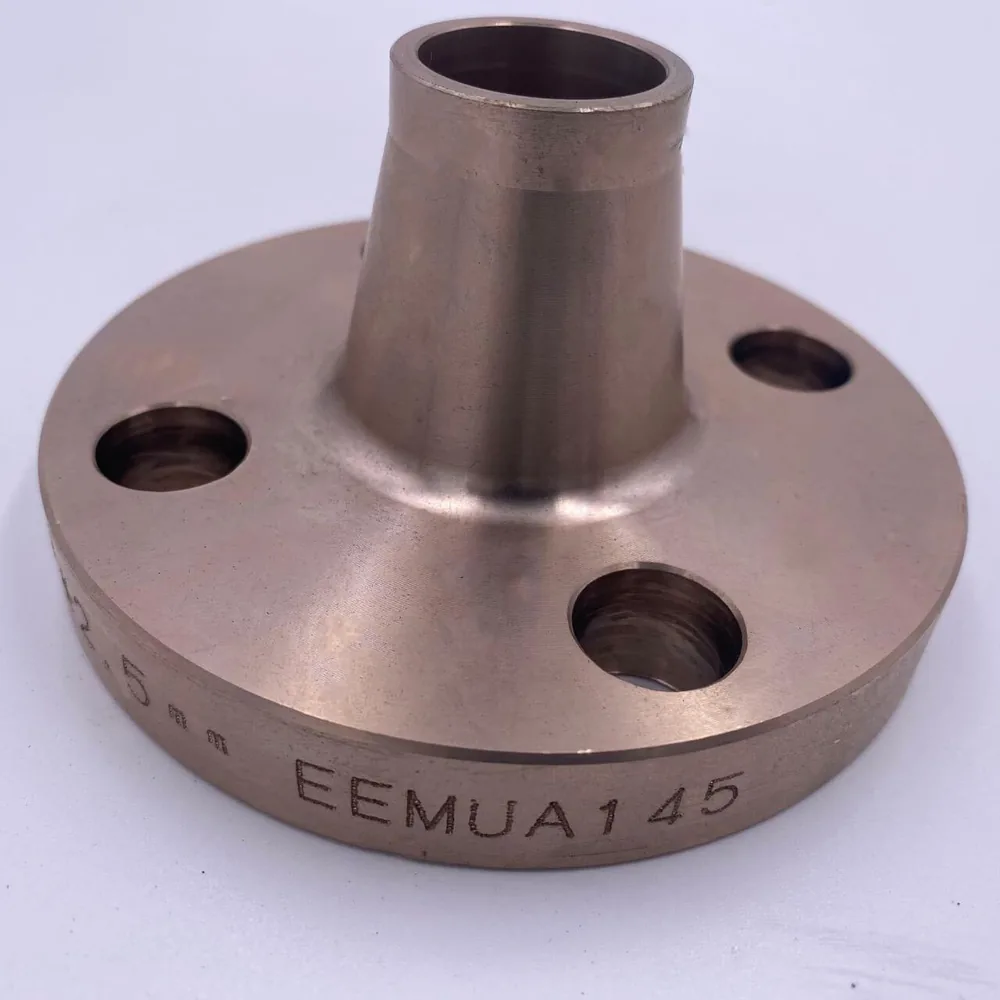
- Copper nickel weld neck flanges
- Copper nickel slip-on flanges
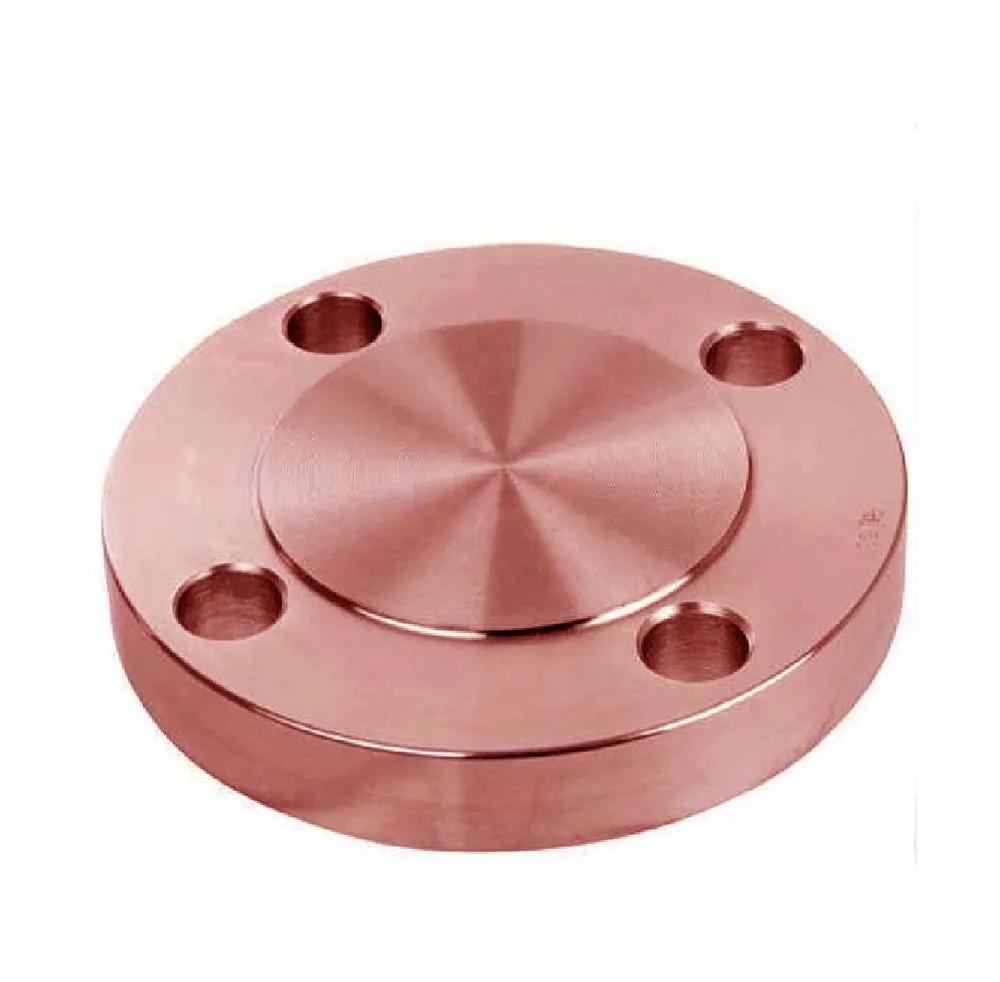
- Copper nickel blind flanges
- Copper nickel socket weld flanges
- Copper nickel threaded flanges
- Copper nickel lap joint flanges
- Copper nickel composite flanges
- Copper nickel orifice flanges
- Copper nickel spectacle blind flanges
- Copper nickel rtj flanges
- Copper nickel expander flanges
- Copper nickel custom manufacturing flanges
Technical reference
Where exact chemistry or mechanical values matter, the applicable ASTM or ASME material specification governs. Those values are not restated here.
| Item | Detail |
|---|---|
| Alloy | Copper-Nickel 70/30 |
| Wrought UNS designation | C71500 |
| European designation | CuNi30Mn1Fe |
| Common product-form specifications | ASTM B151 (rod and bar), ASTM B122 (plate, sheet, strip), ASTM B466 (seamless pipe and tube), ASTM B467 (welded pipe), ASTM B369 (castings, cast equivalent) |
| Chemical composition | As defined by the applicable ASTM or ASME specification |
| Mechanical properties | Depend on product form and temper; as defined by the applicable specification |
| Weldability | Weldable with matching copper-nickel filler metal under a qualified procedure |
| Flange standards referenced | ASME B16.5, ASME B16.47, ASME B16.48 and others per project specification |
| Documentation | MTC, dimensional report, certificate of conformity, PMI, third-party inspection per project requirements |
90/10 and 70/30 compared
| Property | Cu-Ni 90/10 | Cu-Ni 70/30 |
|---|---|---|
| Nominal composition | 90% copper, 10% nickel, with controlled iron and manganese | 70% copper, 30% nickel, with controlled iron and manganese |
| Wrought UNS designation | C70600 | C71500 |
| Strength and hardness | Lower | Higher |
| Tolerance of high flow velocity and impingement | Good; set by design velocity limits | Better than 90/10; set by design velocity limits |
| Relative material cost | Lower | Higher (more nickel) |
| Typical flange use | General seawater piping, cooling water, firewater, ballast | Higher-velocity or more demanding duty, or to match 70/30 pipe and tube |
Read the full alloy comparison article for selection guidance.
Copper Nickel 70/30 flange FAQs
What is the UNS number for copper nickel 70/30?
The wrought alloy is UNS C71500. Cast material of similar nominal composition is covered by a separate designation under ASTM B369.
When should I choose 70/30 over 90/10?
Typically for higher flow velocity, more demanding duty, or when the connected pipe and equipment are 70/30. Many seawater lines use 90/10 successfully, so confirm against your design basis.
Is 70/30 immune to corrosion in seawater?
No alloy is. 70/30 performs well in flowing seawater within design limits but can still be affected by sulfide pollution and stagnant conditions.
Does Sunflex Metalloy supply every flange type in 70/30?
All flange types listed on this site can be quoted in 70/30. Availability by size and class depends on the standard and stock form.